
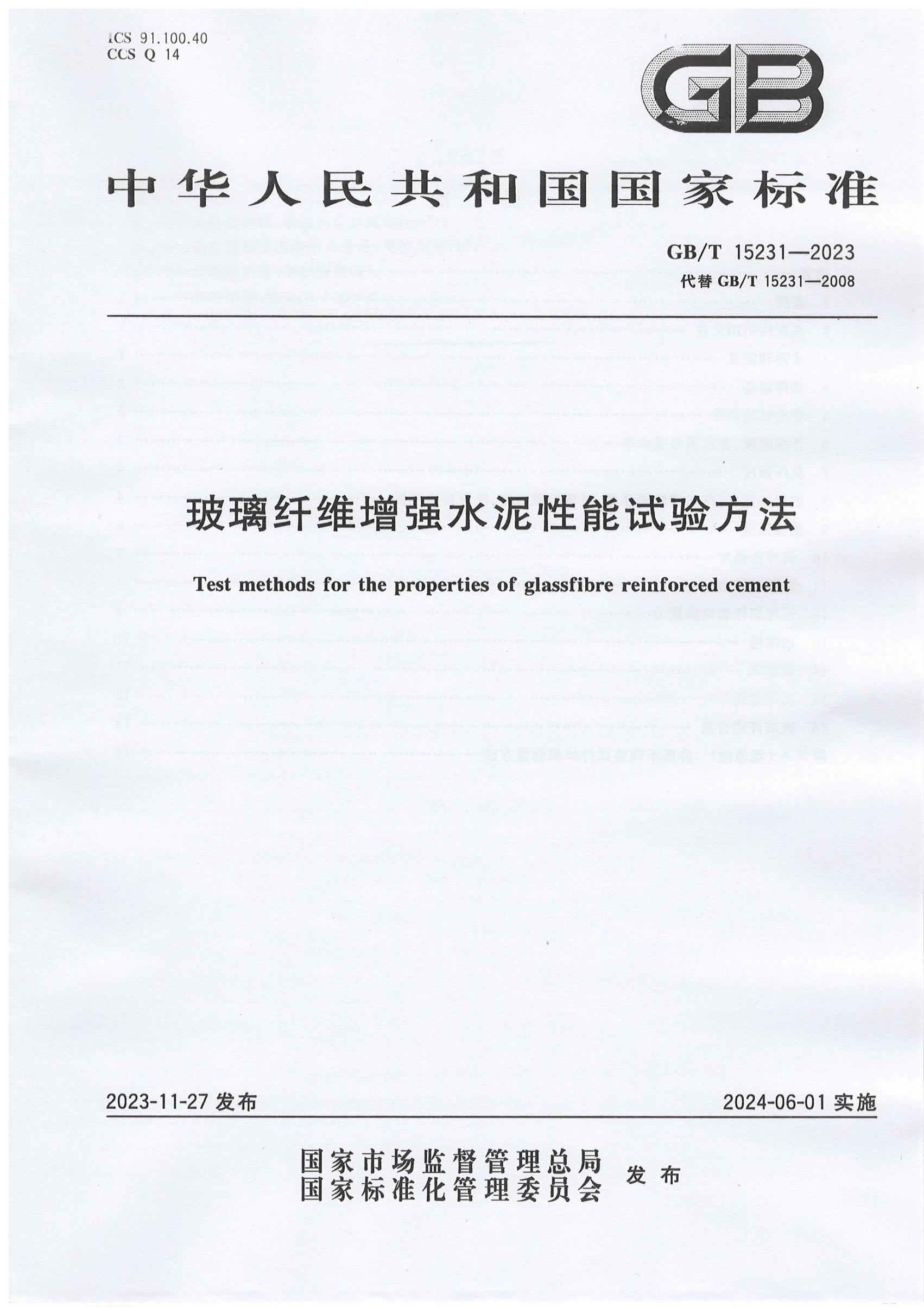
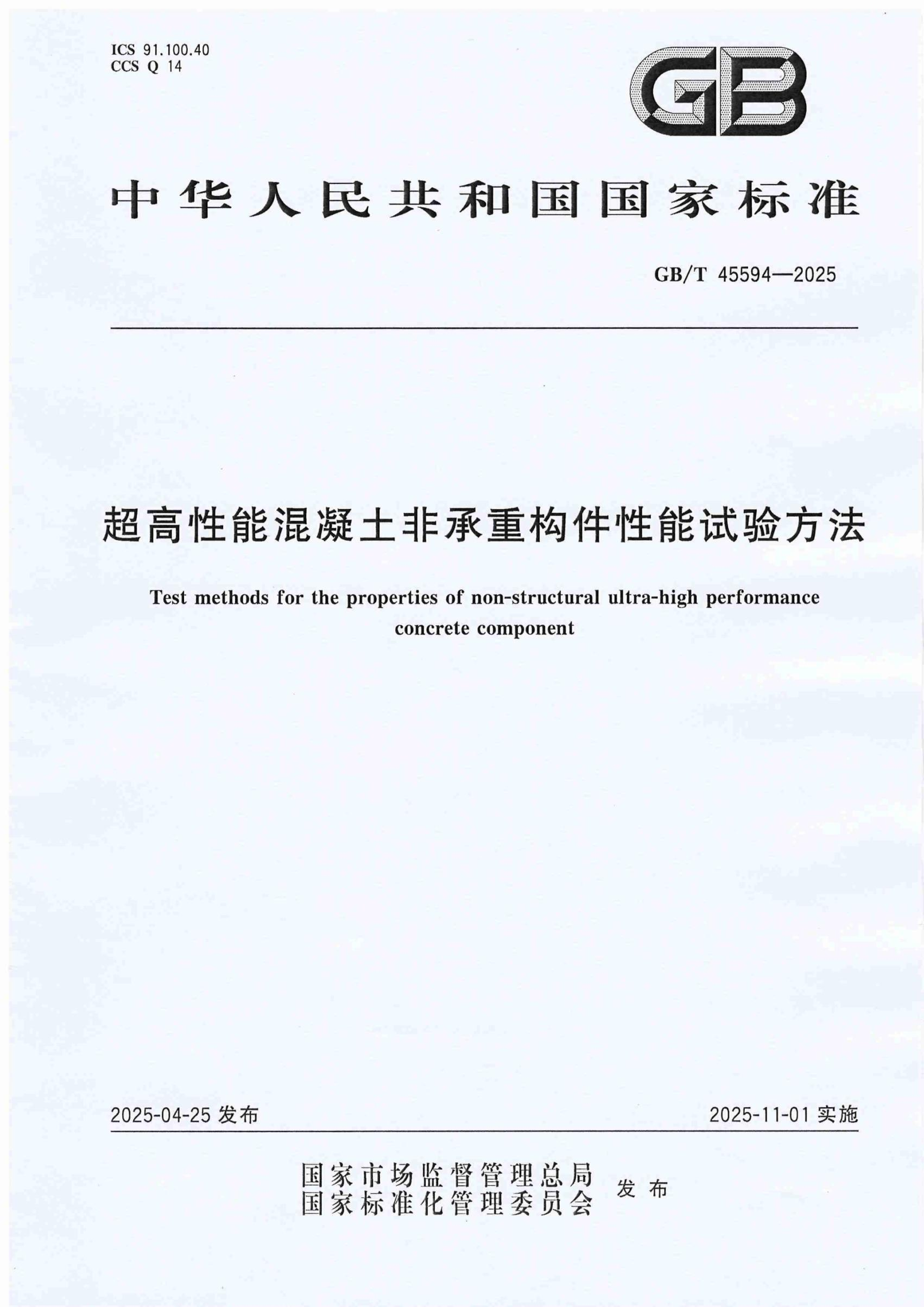
Recently, China's building materials sector has witnessed the intensive implementation of key technical standards: Test Methods for the Properties of Glass Fibre Reinforced Cement (GB/T 15231—2023) officially came into effect on June 1, 2024, while Test Methods for the Properties of Non-Structural Ultra-High Performance Concrete Components (GB/T 45594—2025) will be enforced starting November 1, 2025. The introduction and advancement of these two national standards lay a solid technical foundation for the standardized upgrading of the Glass Fibre Reinforced Cement (GRC) and Ultra-High Performance Concrete (UHPC) industries, reflecting the core trend of China's building materials sector shifting toward "high quality, standardization, and green development".
Iterative Upgrading: GRC Industry Bids Farewell to Old Standards for Precise Quality Control
As a complete replacement for the 2008 version, the new Test Methods for the Properties of Glass Fibre Reinforced Cement (GB/T 15231—2023) addresses the pain points in performance evaluation of GRC materials with technical innovations. GRC, known for its light weight, high strength, and flexible formability, is widely used in architectural decoration, landscape engineering, and prefabricated buildings. However, the previous standard, implemented over a decade ago, struggled to keep up with technological advancements and performance verification needs of new products.
The updated standard optimizes test accuracy and coverage, achieving breakthroughs in testing methods for core indicators such as flexural strength, impact resistance, and durability. This enables enterprises to control product quality more precisely, helping the GRC industry break free from the low-quality, low-price competition trap and accelerating its application in green buildings and urban renewal projects.
Filling the Gap: Unified Testing Guidelines for UHPC Non-Load-Bearing Components
Ultra-High Performance Concrete (UHPC) has emerged as a "star material" in the building materials sector in recent years, offering exceptional strength, durability, and design flexibility. It has shown great potential in non-load-bearing applications such as building facades, decorative components, and municipal landscapes. However, the long-standing lack of unified performance testing methods for UHPC non-load-bearing components in China has led to inconsistent product quality and unclear acceptance criteria, hindering the industry's large-scale development.
The release of Test Methods for the Properties of Non-Structural Ultra-High Performance Concrete Components (GB/T 45594—2025) fills this technical gap for the first time. The standard establishes unified specifications for test procedures, index evaluation, and data traceability, providing clear guidelines for quality control and project acceptance of UHPC materials. This will accelerate its commercial adoption in architectural decoration and cultural tourism facilities, injecting strong momentum into technological innovation and market expansion.
Industry Insight: Standards Drive High-Quality Transformation of the Building Materials Sector
The successive implementation of these two national standards marks an acceleration in the standardization of China's building materials industry, reflecting three key industry trends:
- Standard Upgrades Force Technological Innovation: The iteration of existing standards and introduction of new ones are building a more comprehensive performance evaluation system, compelling enterprises to increase R&D investment and upgrade technologies to meet higher quality control requirements.
- Improved Industrial Chain Collaboration: Precise testing methods will help downstream project owners select materials and conduct acceptance more scientifically, reducing quality risks and promoting collaborative upgrading across the building materials supply chain.
- Deepening Green and Low-Carbon Strategies: The standardized application of green building materials like GRC and UHPC will further reduce carbon emissions throughout the building lifecycle, supporting the synergistic advancement of the "dual carbon" goals and new industrialization strategies.
At a critical juncture of industry upgrading, the implementation of these two national standards not only safeguards the GRC and UHPC industries but also provides a model for the standardized transformation of the entire building materials sector. As technical standards and industrial practices converge, China's building materials industry is accelerating its journey toward high-quality development, solidifying its technological leadership in global competition.